Revenue per visitor measures how much value each visitor generates, making it one of the most important growth metrics in ecommerce. Smart Shopify merchants focus on increasing revenue per visitor through pricing, bundles, and purchase structure—because improving this metric makes every traffic source more profitable without increasing acquisition costs.
Why Traffic Is Only Part of the Growth Equation
Most ecommerce advice focuses on acquiring more traffic. Run more ads, publish more content, expand to new channels. While traffic is necessary, it is not sufficient.
Many Shopify stores reach a point where:
- Traffic increases
- Orders increase
- Profit does not
This happens because traffic scales linearly, but inefficiencies scale with it. If each visitor generates limited value, more traffic simply amplifies the same problem.
This is why experienced merchants begin shifting their focus from traffic to value per visitor.
What Revenue Per Visitor Actually Means
Revenue per visitor (RPV) is a simple concept:
RPV = Total Revenue ÷ Total Visitors
It combines two critical factors:
- Conversion rate
- Average order value (AOV)
Instead of optimizing each metric in isolation, RPV reflects how effectively your store turns attention into revenue.
A store with:
- moderate traffic
- strong AOV
- efficient pricing
can outperform a store with high traffic but weak monetization.
Why Smart Merchants Prioritize RPV Over Traffic
Focusing on RPV changes how decisions are made.
Instead of asking:
- “How do we get more visitors?”
merchants start asking:
- “How do we make each visitor worth more?”
This shift has several advantages:
- It improves profitability across all channels
- It reduces dependency on paid traffic
- It makes growth more predictable
Most importantly, it creates a system where marketing amplifies a strong foundation instead of compensating for a weak one.
The Hidden Driver: Average Order Value
AOV is one of the most powerful contributors to RPV.
When AOV increases:
- Each conversion generates more revenue
- Marketing becomes more efficient
- Profit margins improve
This is why many high-performing Shopify stores focus on increasing order size before increasing traffic.
How Bundles Increase Revenue Per Visitor
Bundles work because they influence the purchase decision at the right moment.
Instead of convincing customers to buy something new, bundles help them buy more of what they already want.
This typically results in:
- higher AOV
- minimal impact on conversion rate
- better perceived value
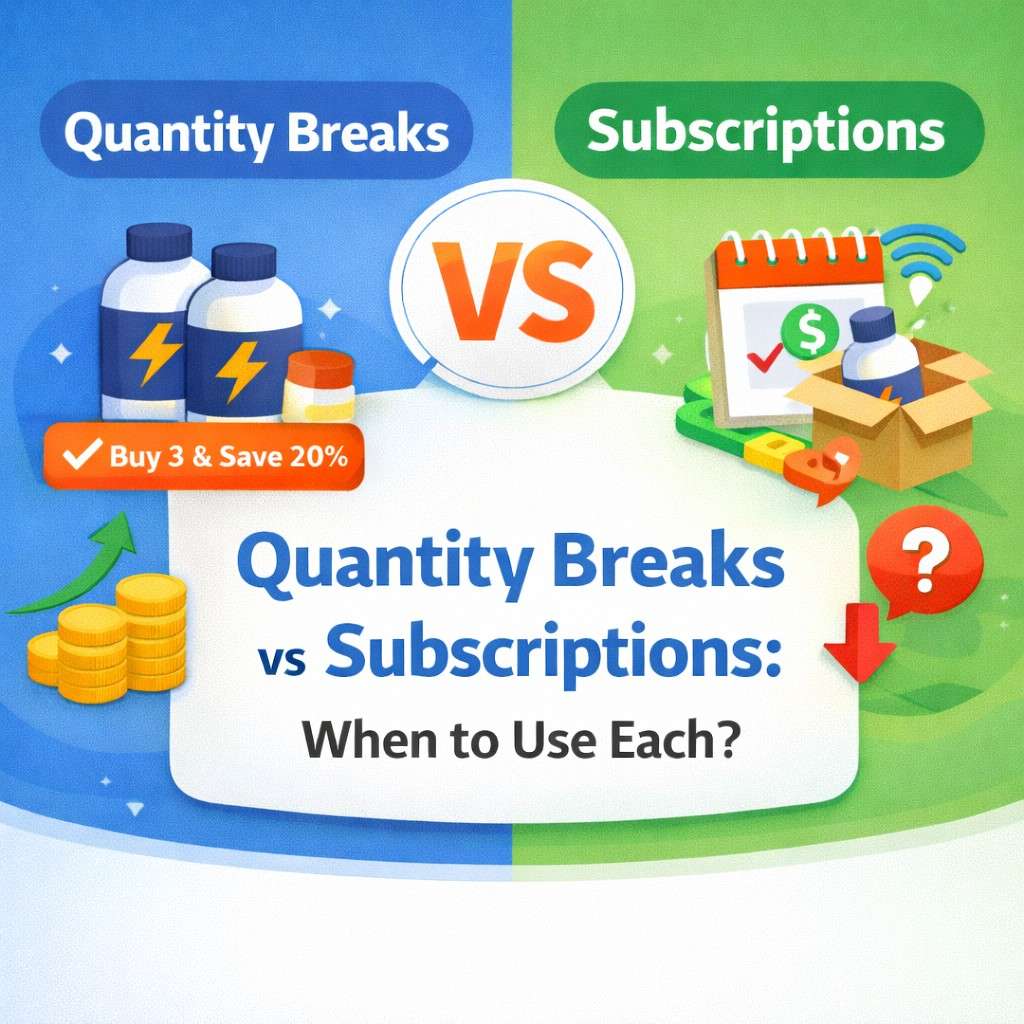
This is especially true for structured bundle approaches like Adoric Bundles Quantity Breaks, where quantity incentives are presented directly on the product page, making the “best value” option clear.
For a deeper understanding of bundle design, see
How to Design Bundle Offers Customers Actually Want
Why Quantity Breaks Are So Effective
Quantity breaks increase RPV by scaling an existing decision.
A customer who decides to buy one unit is already committed. Offering better value for buying more units encourages a larger order without introducing additional friction.
This works particularly well in:
- consumables
- apparel basics
- skincare
- B2B-lite products
Instead of pushing for more conversions, quantity breaks increase the value of each conversion.
Pricing Structure vs Discounting
Discount codes often increase conversion rates in the short term, but they rarely improve RPV sustainably.
Over time, discounts:
- reduce perceived value
- train customers to wait
- shrink margins
Structured pricing—through bundles and quantity tiers—achieves a different outcome. It increases order value while preserving price integrity.
For a deeper explanation of discount fatigue, see
Why Discount Codes Stop Working Over Time on Shopify
Real Shopify Examples
Apparel Brand
A store increased RPV by introducing “buy 2” and “buy 3” pricing tiers for basics. Traffic remained constant, but revenue increased because customers bought more per order.
Supplements Store
Instead of focusing on traffic growth, the brand introduced 90-day supply bundles. This increased AOV and improved profitability across all channels.
B2B-Lite Ecommerce
Tiered pricing aligned with buyer expectations, increasing order size and reducing reliance on marketing spend.
When Traffic Still Matters Most
There are cases where increasing traffic should remain the priority:
- Early-stage stores with low visibility
- Products with limited awareness
- Weak product positioning
If customers are not discovering your product, improving RPV alone won’t solve the problem.
However, once traffic is consistent, improving RPV usually delivers better returns than scaling acquisition.
Common Mistakes Merchants Make
- Focusing only on traffic growth
- Measuring success by conversion rate alone
- Ignoring average order value
- Overusing discounts instead of improving pricing structure
- Scaling ads before optimizing monetization
These mistakes often lead to expensive growth instead of efficient growth.
How to Improve Revenue Per Visitor
Improving RPV typically involves:
- introducing bundle offers
- implementing quantity-based pricing
- improving product page structure
- clarifying value propositions
- reducing purchase friction
Each of these changes increases the value generated from existing visitors.
Frequently Asked Questions
What is revenue per visitor in e-commerce?
Revenue per visitor measures how much revenue each visitor generates on average, combining conversion rate and AOV.
Why is revenue per visitor more important than traffic?
Because it determines how efficiently your store converts attention into revenue.
How do bundles increase revenue per visitor?
They increase average order value by encouraging customers to purchase more within a single transaction.
What is a good revenue per visitor benchmark?
It varies by industry, but higher RPV generally indicates better monetization efficiency.
How can Shopify stores improve revenue per visitor?
By optimizing pricing, bundles, quantity incentives, and product page structure.
Final Thoughts
Traffic brings potential. Revenue per visitor determines results.
Stores that focus only on traffic often find growth becoming more expensive over time. Stores that improve RPV create a system where every visitor becomes more valuable.
Instead of asking “How do we get more visitors?”, a more effective question is:
“How can we make every visitor count more?”
That shift is often what turns steady growth into scalable growth.