Pricing in ecommerce is not just about numbers—it’s about perception. Customers rarely evaluate prices in isolation; instead, they compare options, anchors, and value signals. Stores that structure prices effectively—through bundles, quantity tiers, and clear comparisons—often increase average order value without lowering their base price.
Why Pricing Psychology Matters More Than Pricing Itself
Many Shopify merchants assume revenue growth comes from lowering prices or offering more discounts. In reality, customers rarely decide based on the absolute price alone.
Instead, they evaluate prices based on context:
- What alternatives exist
- What appears to be the best value
- How the price compares to nearby options
This means that the way prices are presented often matters more than the price itself.
Well-structured offers influence how customers interpret value and make decisions.
The Anchoring Effect: Why the First Price Matters
One of the most powerful pricing principles is anchoring.
Anchoring happens when the first price customers see becomes the reference point for evaluating all other options.
For example:
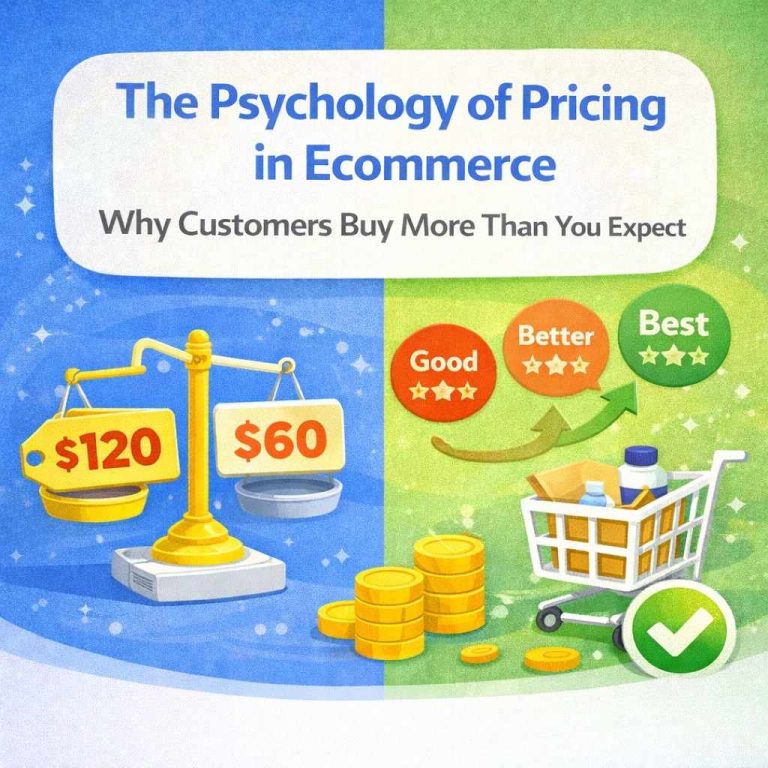
- A $120 item next to a $60 item makes the $60 item feel affordable
- A “3-pack best value” option makes the single unit feel less attractive
In ecommerce, anchors are frequently created through:
- bundles
- quantity tiers
- comparison pricing
This is one reason why structured pricing systems—such as quantity bundles enabled by Adoric Bundles Quantity Breaks—can increase order size without changing the underlying product.
Customers respond to relative value more than absolute cost.
Why Customers Prefer Structured Choices
Customers rarely enjoy making complex decisions.
When pricing offers too many unclear options, shoppers hesitate. But when choices are structured clearly—such as “good / better / best”—decision-making becomes easier.
Effective ecommerce pricing often uses three tiers:
- Single item
- Multi-pack
- Best-value bundle
This structure works because customers instinctively look for the middle or best-value option.
The Psychology Behind Bundles
Bundles are powerful because they shift the customer’s focus from price to value composition.
Instead of asking:
“Is this product worth $40?”
Customers begin asking:
“Is this bundle worth it?”
Bundles change the decision from evaluating a price to evaluating a package of value.
This is why bundles frequently outperform simple discounts. They increase perceived value rather than lowering price.
Why Quantity Pricing Encourages Larger Orders
Another key pricing psychology principle is commitment scaling.
Customers who have already decided to buy one item are far more likely to buy two or three if the value difference is clear.
Quantity pricing works because it introduces:
- a clear “best deal”
- a logical incentive to buy more
- a sense of efficiency
Instead of convincing someone to purchase something new, quantity breaks simply encourage them to increase the size of a decision they’ve already made.
For many Shopify stores, this is the fastest path to increasing average order value.
How Pricing Structure Influences Revenue
The structure of pricing affects how customers behave.
Consider two product pages.
Page A shows:
- One price
- One purchase option
Page B shows:
- Single unit
- Buy 2 and save
- Buy 3 for best value
Even if the single-unit price remains identical, Page B usually produces higher order values because it introduces comparison.
Customers instinctively evaluate options and gravitate toward the best perceived value.
Real Ecommerce Examples
Apparel Stores
Basic clothing items often benefit from quantity pricing. Customers already expect to buy multiple units, so tiered pricing feels natural.
Supplements Brands
Many supplement stores offer 30-day, 60-day, and 90-day supply bundles. This structure reframes pricing around convenience and value.
B2B-Lite Ecommerce
Tiered pricing aligns with procurement expectations. Buyers assume that larger quantities should have better unit pricing.
Common Pricing Mistakes in Ecommerce
Many pricing strategies fail not because the price is wrong, but because the structure is unclear.
Common mistakes include:
- Offering only one purchasing option
- Overusing discount codes
- Hiding bundle offers deep in the funnel
- Creating too many pricing choices
- Ignoring how customers compare options
Pricing works best when customers can easily see which choice is the best value.
When Pricing Psychology Doesn’t Work
Pricing structure cannot compensate for fundamental issues such as:
- weak product-market fit
- unclear product value
- poor product page design
If customers don’t understand the value of the product itself, no pricing strategy will fully solve the problem.
Pricing psychology amplifies value—it does not replace it.
Frequently Asked Questions
What is pricing psychology in ecommerce?
Pricing psychology refers to how customers interpret and react to prices based on comparison, perception, and decision framing rather than absolute cost.
Why do customers buy more when prices are structured differently?
Structured pricing creates anchors and comparisons that help customers identify better value options.
How do bundles influence price perception?
Bundles shift the focus from individual product cost to the total value of the offer.
Why do quantity discounts increase order size?
They encourage customers who already intend to purchase to increase the quantity for better perceived value.
What pricing mistakes reduce ecommerce revenue?
Common mistakes include overusing discounts, offering unclear purchase options, and failing to structure product offers effectively.
Final Thoughts
In ecommerce, pricing rarely works in isolation. Customers evaluate prices relative to the options around them.
Stores that structure offers thoughtfully—through bundles, quantity tiers, and clear value anchors—often increase revenue without lowering prices or adding new products.
Instead of asking “What price should we charge?”, a more powerful question is:
“How should we present our prices so the best choice is obvious?”
That shift in thinking is where effective ecommerce pricing begins.