The most effective way to grow a Shopify store is to turn your best-selling products into a revenue engine by increasing how much customers buy—not just how many customers you acquire. This is typically achieved through bundles, quantity breaks, and structured pricing that expand order value without adding new products.
Most high-performing stores don’t grow by constantly launching new SKUs. They grow by extracting more value from what already works.
Why Your Best Products Should Drive Your Strategy
Every Shopify store has a small number of products that generate a large percentage of revenue. These products already have:
- proven demand
- validated messaging
- consistent conversion
Yet many merchants treat best-sellers as static assets instead of dynamic growth drivers.
Instead of asking “What new product should we launch?”, the more effective question is:
“How do we get more value from what’s already working?”
This is where revenue engines are built.
What a Revenue Engine Actually Looks Like
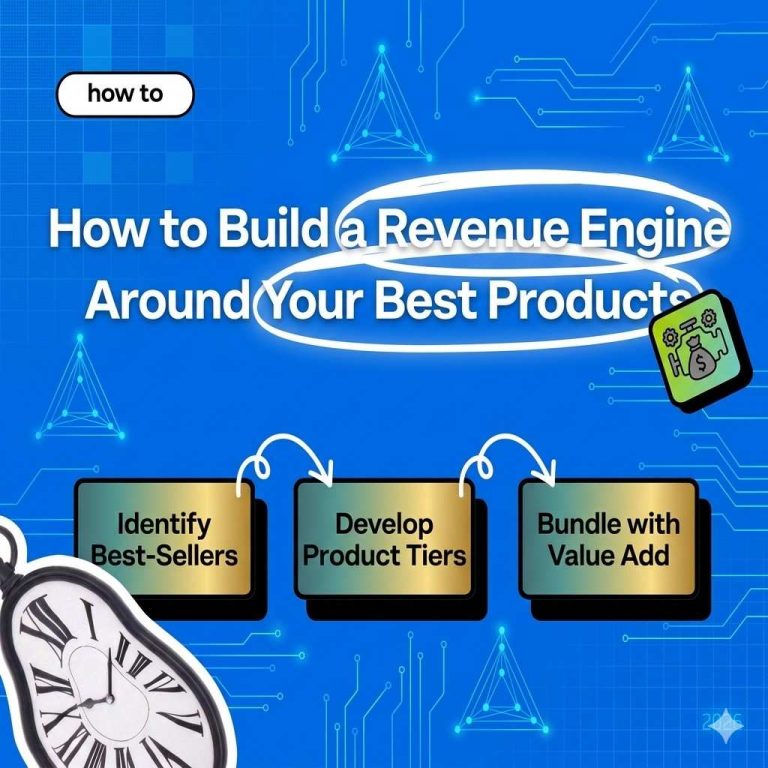
A revenue engine is not a single tactic. It’s a system built around a core product that:
- increases average order value
- improves purchase efficiency
- scales profit without proportional increases in traffic
At its core, a revenue engine turns one strong product into multiple ways to buy.
This is where structured pricing—such as bundles and quantity-based offers—becomes critical. Tools like Adoric Bundles Quantity Breaks support this by allowing merchants to present multiple purchase options directly on the product page, guiding customers toward higher-value orders.
Step 1: Expand How Customers Buy, Not What They Buy
The fastest way to grow revenue from a best-seller is to introduce more purchase options.
Instead of:
- one product
- one price
- one decision
you create:
- multiple quantities
- multiple value tiers
- multiple purchase paths
For example:
- Buy 1 → standard price
- Buy 2 → better value
- Buy 3 → best value
This structure shifts the decision from whether to buy to how much to buy.
Step 2: Use Quantity Breaks to Increase Order Size
Quantity breaks are one of the most effective ways to turn a best-seller into a revenue driver.
They work because they build on existing intent. A customer who already wants the product is easier to convert into a larger purchase than a new customer is to acquire.
Quantity-based pricing:
- increases AOV
- maintains conversion rates
- aligns with natural buying behavior
This is especially effective for:
- consumables
- apparel basics
- skincare
- B2B-lite products
For comparison with other monetization models, see
Quantity Breaks vs Subscriptions: When to Use Each
Step 3: Structure the Product Page for Value, Not Just Conversion
Many product pages are designed to close a sale—but not to maximize its value.
A revenue-focused product page should clearly show:
- multiple purchase options
- the best-value tier
- the benefit of buying more
This often includes:
- “Most Popular” labels
- savings indicators
- clear quantity selection
Customers don’t naturally optimize their purchase—you need to guide them.
For a deeper look at pricing behavior, see
The Psychology of Pricing in Ecommerce
Step 4: Bundle Around the Core Product
Bundles don’t always require multiple different products. In many cases, the most effective bundles are built around the same product.
Examples:
- multi-unit bundles
- usage-based bundles (30-day vs 90-day)
- convenience-based offers
Bundles shift the focus from price to value. Instead of evaluating a single product, customers evaluate the entire offer.
This reduces friction and increases perceived value.
Step 5: Reinforce Value Instead of Lowering Price
Many merchants try to scale best-sellers by introducing discounts. While this can increase short-term conversions, it often reduces long-term profitability.
A better approach is to:
- highlight value through structure
- reward higher commitment
- avoid undermining price perception
This is why structured pricing strategies often outperform discount-based approaches.
Real Shopify Examples
Supplements Brand
A best-selling supplement became more profitable when offered as a 90-day bundle instead of a single unit. Customers preferred convenience over repeated purchases.
Apparel Store
A top-selling t-shirt increased revenue through “buy 2” and “buy 3” offers, aligning with natural buying behavior.
B2B-Lite Store
Tiered pricing matched procurement expectations, increasing order size without adding new products.
When Expanding Beyond Your Best Product Makes Sense
There are situations where adding new products is the right move:
- when the best-seller has limited repeat potential
- when customer demand clearly extends to adjacent categories
- when AOV optimization is already maximized
However, expanding too early often leads to diluted focus and weaker performance.
A strong revenue engine usually starts with maximizing one product before expanding outward.
Common Mistakes Merchants Make
- launching new products instead of optimizing best-sellers
- relying heavily on discount codes
- offering only one purchase option
- ignoring product page structure
- focusing only on traffic growth
These mistakes often prevent stores from fully realizing the potential of their best products.
Frequently Asked Questions
How do you scale revenue from best-selling products?
By increasing average order value through bundles, quantity breaks, and structured pricing.
Should you build your store around one hero product?
Often, yes. Many successful stores scale around a strong core product before expanding.
How do bundles increase revenue from best-sellers?
They encourage customers to purchase more units or value within a single order.
What is the best way to increase AOV on a top product?
Introducing quantity-based pricing and clear value tiers is usually the most effective approach.
When should you expand beyond your best-selling product?
After optimizing purchase structure and maximizing revenue potential from the existing product.
Final Thoughts
Your best product is not just a top seller—it’s your strongest growth lever.
Stores that scale efficiently don’t rely on constant expansion. They build systems that extract more value from what already works.
Instead of asking “What should we add next?”, a more effective question is:
“How can we turn this product into a better, higher-value decision?”
That’s where a true revenue engine begins.