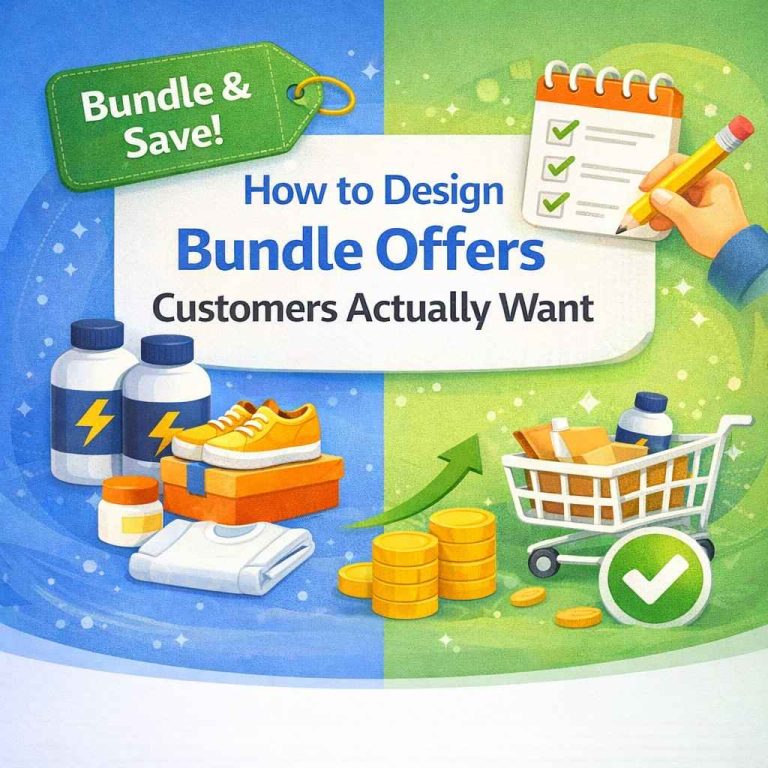
Customers want bundles that simplify decisions and feel like an obvious value, not forced discounts. The most effective bundle offers are built around how customers already buy, grouping complementary products or quantities in a way that feels natural, clear, and confidence-boosting.
Why Most Bundle Offers Don’t Work
Many Shopify merchants create bundles by asking, “What can we discount together?” instead of “What does the customer already want together?”
This leads to bundles that:
- Feel arbitrary
- Confuse buyers
- Lower margins without improving conversion
Successful bundles don’t invent demand. They organize existing demand.
This is why structured bundling approaches—like those enabled by Adoric Bundles Quantity Breaks, focus on guiding quantity and combination decisions directly on the product page, rather than pushing promotions after the fact.
Start With Customer Behavior, Not Products
The best bundle ideas come from observing how customers already behave.
Ask:
- Do customers buy more than one unit?
- Do they buy complementary items together?
- Do they restock on a predictable cadence?
Bundles should reflect these patterns, not fight them
The Three Bundle Types Customers Actually Want
1. Quantity-Based Bundles
Quantity bundles reward customers for buying more of the same product.
Examples:
- Buy 2, save more
- Buy 3, get the best value
These work especially well for:
- Consumables
- Apparel basics
- Supplements
- B2B-lite products
They feel like pricing logic, not marketing.
This is where quantity-based tools outperform traditional bundle hacks, because they preserve clarity and confidence.
2. Complementary Product Bundles
These bundles group products that naturally go together.
Examples:
- Skincare routine sets
- Outfit bundles
- Starter kits
The key is relevance. Every item in the bundle should make sense without explanation.
If the customer has to think, the bundle is already weaker.
3. “Complete the Use Case” Bundles
These bundles answer the question: “What else do I need to get full value from this?”
They work best for:
- New customers
- Complex products
- First-time purchases
Instead of upselling features, they reduce uncertainty.
For comparison against upsell-heavy strategies, see
Bundles vs Upsells: What Increases Revenue per Visitor?
How to Price Bundles Without Killing Margins
Pricing is where most bundle strategies fail.
Effective bundle pricing:
- Preserves the integrity of the base price
- Rewards higher commitment
- Avoids deep, blanket discounts
This is why bundles often outperform discount codes over time.
For a deeper look at discount fatigue, see
Why Discount Codes Stop Working Over Time on Shopify
Where Bundle Offers Should Appear
Placement matters as much as structure.
High-performing bundle placements:
- Directly on the product page
- Near the price and quantity selector
- Before checkout, decisions are made
Bundles shown too late in the funnel behave like upsells—and convert like them too.
This is why on-page bundle logic consistently outperforms pop-ups and post-cart offers.
Real Shopify Examples
Apparel Store
Single-item purchases dominated until quantity bundles were introduced for basics. AOV increased without affecting the conversion rate.
Supplements Brand
Routine-based bundles outperformed discount codes by reframing value as “longer supply” instead of “cheaper price.”
B2B-Lite Store
Tiered quantity bundles aligned with procurement logic and reduced negotiation friction.
Common Mistakes Merchants Make
- Bundling unrelated products
- Over-discounting bundles
- Offering too many bundle options
- Hiding bundles late in the funnel
- Treating bundles as promotions instead of a pricing strategy
Most bundle failures come from overthinking the offer and underthinking the customer.
When Bundles Don’t Make Sense
Bundles are less effective when:
- Products are highly unique or one-off
- Customers rarely buy more than one unit
- Margins are extremely thin
- The product value isn’t clearly understood yet
In these cases, focus first on product clarity and positioning.
Frequently Asked Questions
What makes a bundle attractive to customers?
Clarity, relevance, and obvious value without mental effort.
Are bundles better than discounts?
Often, yes. Bundles add perceived value instead of reducing price.
How many products should be in a bundle?
Usually 2–4. More than that increases friction and decision fatigue.
Do bundles work for all Shopify stores?
No. They work best where customers naturally buy multiple items or quantities.
Where should bundles be shown on a product page?
Near the price and quantity selector, before checkout decisions.
Final Thoughts
Bundles don’t work because they’re clever. They work because they feel right.
When a bundle mirrors how customers already think and buy, it reduces friction, increases confidence, and lifts AOV naturally, without relying on discounts.
![10 Tips for Dropshipping With Oberlo Chrome Extension [2024]](https://adoric.com/blog/wp-content/uploads/2022/02/10-tips-for-Dropshipping-with-Oberlo-Chrome-Extension-2022-1.jpg)