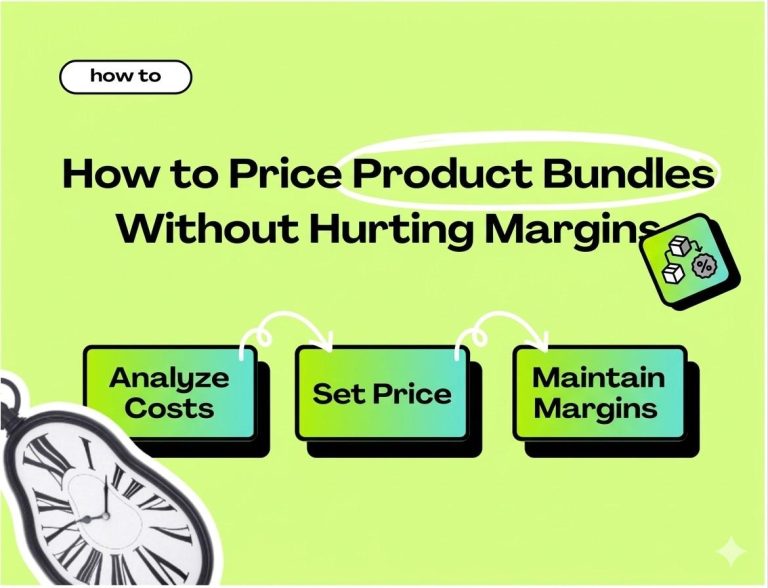
Pricing product bundles without hurting margins requires starting from contribution margin, not discount percentage. The most profitable bundles create perceived value through convenience, structure, or quantity—not deep price cuts. Shopify merchants who combine smart bundle pricing with quantity-based incentives, often using Adoric Bundles Quantity Breaks, consistently grow AOV while protecting profitability.
Why Bundle Pricing Goes Wrong So Often
Most bundle pricing mistakes come from copying discount logic instead of designing value logic. Merchants create bundles, apply a flat 15–25% discount, and assume that higher AOV will compensate for thinner margins.
In reality, poorly priced bundles increase order value while quietly eroding profit. The issue isn’t bundling—it’s how bundles are priced.
If you’re still treating bundles as short-term promotions, you’re leaving margin on the table.
The Margin-First Way to Price Bundles
Before choosing any bundle price, you need one number: minimum acceptable contribution margin. This is the margin that keeps your business healthy after fulfillment, marketing, and overhead.
Once that number is clear, bundle pricing becomes a design problem—not a discounting problem.
A simple framework:
- Start with individual item margins
- Identify which items can “carry” margin
- Decide where flexibility exists without crossing your margin floor
This approach is what separates profitable bundles from expensive ones.
Why Perceived Value Beats Discounts
Customers don’t evaluate bundles mathematically. They evaluate them emotionally.
Bundles feel valuable when they:
- Reduce decision effort
- Save time
- Create completeness (a “set” or “kit”)
- Encourage bulk buying without pressure
This is why bundles with smaller discounts often outperform aggressive price cuts.
In many cases, quantity breaks outperform bundle discounts entirely, because they reward intent instead of forcing combinations. That’s why merchants often layer bundle logic with quantity-based pricing using Adoric Bundles Quantity Breaks rather than choosing just one approach.
For a deeper look at this interaction, see
Quantity Breaks vs Bundles: Which Drives Higher AOV?.
Bundle Pricing by Product Type
Apparel & Fashion
Margins are often tight, and returns are common. Bundles work best when priced around styling convenience rather than savings.
Effective approach:
- Minimal discount
- Clear “outfit” logic
- Optional quantity incentives
Avoid aggressive bundle discounts unless margins are protected elsewhere.
Consumables & Replenishables
This is where bundle pricing shines. Customers already expect to buy more than one unit.
Best strategy:
- Modest bundle discount
- Strong quantity breaks
- Clear savings messaging
Many stores skip bundles entirely here and rely on quantity breaks alone to protect margins while increasing AOV.
B2B-Lite & Wholesale-Adjacent Stores
Bundles should emphasize predictability and bulk logic, not promotions.
Effective pricing:
- Tiered bundle pricing
- Quantity-based thresholds
- Stable margins across tiers
Discounting too aggressively here damages long-term pricing perception.
When Quantity Breaks Protect Margins Better Than Bundles
If your bundle only exists to lower price per unit, it’s usually better replaced with quantity breaks. Quantity-based pricing:
- Scales naturally with order size
- Preserves margin thresholds
- Reduces over-discounting
This is why many Shopify merchants treat bundles as structure and quantity breaks as pricing logic, managed together through Adoric Bundles Quantity Breaks.
For a broader revenue perspective, see
How to Increase Average Order Value Without Discounts (note: if this article does not yet exist, it should be created as a supporting pillar).
Common Mistakes That Kill Bundle Margins
These issues appear repeatedly across Shopify stores:
- Choosing discount percentages before margin analysis
- Applying the same bundle discount storewide
- Treating bundles as promotions instead of pricing architecture
- Ignoring fulfillment and return costs
- Failing to test quantity-based alternatives
Most margin loss isn’t visible immediately—it shows up months later.
How to Validate Bundle Pricing Without Risk
Before committing to permanent bundle pricing:
- Test bundles alongside quantity breaks
- Monitor contribution margin, not just AOV
- Segment performance by product type
- Compare conversion lift vs margin impact
This is where flexible systems matter more than rigid rules.
Frequently Asked Questions
How much discount should a product bundle have?
Only as much as your margin structure allows—often less than merchants expect.
Do bundles always reduce profit margins?
No. Well-priced bundles often increase total profit by raising AOV without proportional cost increases.
Should bundles be cheaper than buying items separately?
Not always. Many high-performing bundles win on convenience, not savings.
Can quantity breaks replace bundle discounts?
Yes, especially for repeat or consumable products.
What’s the biggest mistake when pricing bundles?
Starting with a discount instead of starting with margins.
Final Thought
The most profitable bundles aren’t the cheapest—they’re the most intentional. When pricing is designed around margins first and value second, bundles stop being risky and start becoming predictable growth levers.