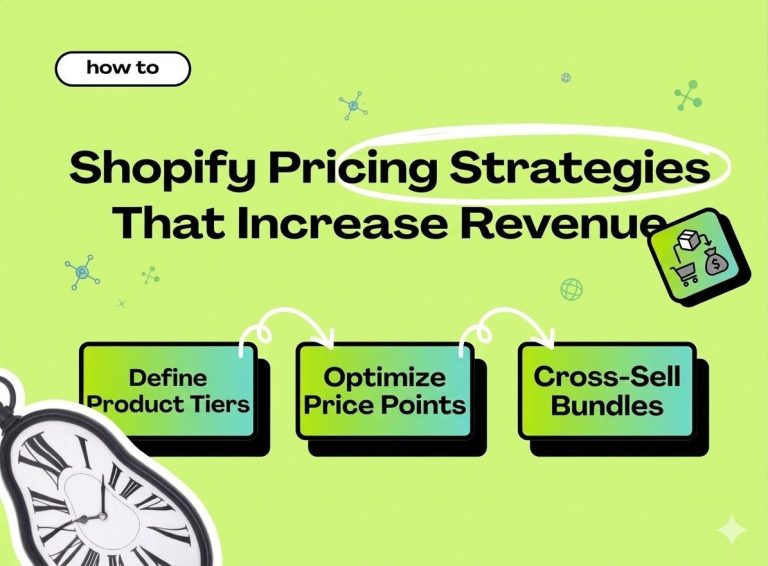
Shopify pricing strategies increase revenue by changing how customers perceive value and make decisions—not just by lowering prices. The most effective approaches include bundles, quantity breaks, and structured pricing that guide customers toward higher-value purchases without reducing margins.
Why Pricing Strategy Is a Growth Lever (Not Just a Setting)
Most merchants treat pricing as a fixed input. Set the price, test a few discounts, and move on.
But pricing is not static—it’s a system. It shapes:
- how customers evaluate your product
- how much they buy
- how profitable each order becomes
This is why pricing strategy often has a bigger impact on revenue than marketing.
Tools like Adoric Bundles Quantity Breaks exist specifically because pricing is not just about the number—it’s about how options are structured on the page to influence buying behavior.
Strategy #1: Use Anchoring to Make Value Obvious
Customers rarely evaluate price in isolation. They compare.
Anchoring works by placing multiple options side by side so customers can evaluate relative value.
For example:
- Buy 1 → $30
- Buy 2 → $55
- Buy 3 → $75 (Best Value)
The third option often becomes the most attractive—not because it’s cheap, but because it feels like the smartest choice.
Anchoring works because it reduces uncertainty and highlights value clearly.
Strategy #2: Bundle Products to Shift Focus From Price to Value
Bundles are one of the most effective pricing strategies because they change the decision itself.
Instead of asking:
“Is this product worth $30?”
customers ask:
“Is this bundle worth it?”
That shift moves attention away from price sensitivity and toward perceived value.
Bundles work especially well for:
- complementary products
- consumables
- repeat-use items
For a deeper breakdown of bundle logic, see
How to Design Bundle Offers Customers Actually Want
Strategy #3: Use Quantity Breaks to Increase Order Size
Quantity breaks are one of the simplest ways to increase revenue.
They work because they expand an existing decision rather than creating a new one.
A customer who already wants one unit is much easier to convince to buy two or three—especially when the value is clearly communicated.
This is why quantity-based pricing often increases AOV with minimal impact on conversion rate.
Strategy #4: Design “Good, Better, Best” Pricing Tiers
Customers prefer structured choices over open-ended decisions.
The “good, better, best” model works because:
- it simplifies decision-making
- it highlights the middle or top option
- it creates a clear best-value choice
Typical structure:
- Entry option → low commitment
- Middle option → balanced value
- Premium option → best deal
Most customers gravitate toward the perceived best-value option.
Strategy #5: Reduce Reliance on Discount Codes
Discount codes can increase short-term conversions, but they often weaken long-term pricing power.
Over time, they:
- train customers to wait for deals
- reduce perceived product value
- compress margins
Structured pricing—through bundles and quantity tiers—achieves a similar effect without lowering the base price.
For a deeper explanation, see
Why Discount Codes Stop Working Over Time on Shopify
Strategy #6: Price Around Use, Not Just Product
One of the most effective pricing strategies is reframing the purchase.
Instead of selling a product, sell:
- a duration (30 days vs 90 days)
- a use case (personal vs family use)
- a goal (starter vs full experience)
This makes pricing feel more logical and aligned with customer intent.
It also reduces friction because customers understand why buying more makes sense.
Strategy #7: Optimize Pricing Where Decisions Happen
Pricing strategy is not just about what you offer—it’s about where and how it’s shown.
The product page is where most pricing decisions are made.
Effective pricing presentation includes:
- visible quantity options
- clear savings indicators
- best-value labeling
- simple comparisons
Customers rarely search for value—they respond to it when it’s clearly presented.
Real Shopify Examples
Apparel Store
Introducing “buy 2” and “buy 3” pricing tiers increased order size without changing the product lineup.
Skincare Brand
A single product became more profitable when reframed as a 90-day bundle instead of a one-time purchase.
B2B-Lite Ecommerce
Tiered pricing aligned with buyer expectations, increasing order size and reducing price sensitivity.
When Pricing Strategy Doesn’t Work
Pricing alone cannot fix:
- weak product-market fit
- unclear value proposition
- poor product page experience
If customers don’t understand the product, pricing improvements will have limited impact.
Pricing works best when it amplifies an already strong offer.
Common Mistakes Merchants Make
- Setting one static price with no alternatives
- Overusing discount codes
- Ignoring how pricing is presented
- Offering too many confusing options
- Optimizing only for conversion rate
These mistakes often reduce revenue even when traffic is strong.
Frequently Asked Questions
What are the best pricing strategies for Shopify stores?
Bundles, quantity breaks, and structured pricing tiers are among the most effective strategies.
How do bundles increase revenue?
They increase perceived value, encouraging customers to spend more per order.
What is the difference between discounts and pricing strategy?
Discounts reduce price. Pricing strategy restructures value without necessarily lowering price.
Do quantity breaks actually increase sales?
Yes, they often increase order size by encouraging customers to buy more of what they already want.
How can I improve pricing without lowering margins?
By using bundles, quantity tiers, and value-based framing instead of direct discounts.
Final Thoughts
Pricing is one of the few levers that affects every part of your business.
It influences how customers decide, how much they buy, and how profitable each order becomes.
Instead of asking “What price should we set?”, a more powerful question is:
“How can we structure our pricing so the best choice is obvious?”
That shift is where revenue growth often begins.