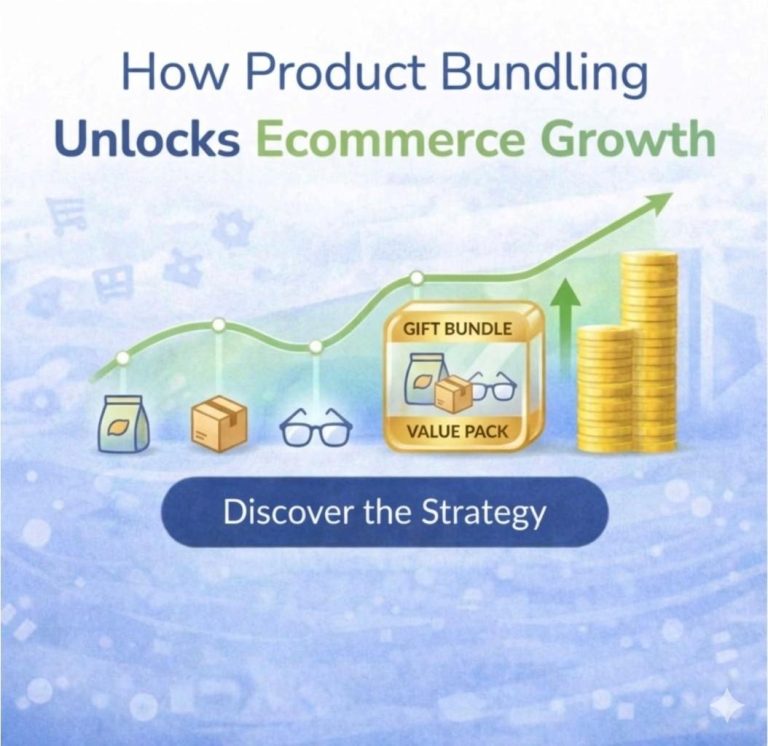
Product bundling increases ecommerce growth by raising the value of each transaction rather than increasing the number of transactions. By combining products or quantities into structured offers, Shopify stores can improve average order value, simplify buying decisions, and reduce reliance on discounts—all without needing more traffic.
Growth doesn’t always come from selling more products. Often, it comes from selling them differently.
Why Bundling Is a Growth Lever, Not a Tactic
Many merchants think of bundling as a promotional tactic—something to use occasionally during campaigns.
High-growth stores treat bundling differently. They use it as a core pricing and offer structure.
Bundling impacts:
- how customers perceive value
- how decisions are made
- how much customers spend
This makes it a foundational growth lever, not just a marketing tool.
How Bundling Increases Average Order Value
At its core, bundling changes the purchase dynamic.
Instead of:
- buying one product
customers consider:
- buying a package
This increases AOV because:
- more value is presented upfront
- the decision shifts from “should I buy?” to “which option is better?”
- larger purchases feel more justified
This is why structured bundling systems—like those enabled by Adoric Bundles Quantity Breaks —consistently increase order size without harming conversion.
Why Bundles Influence Customer Decisions
Bundles work because they align with how customers actually think.
Customers prefer:
- clear choices
- perceived savings
- simplified decisions
Bundles provide all three.
They reduce the need to:
- browse additional products
- compare multiple pages
- make multiple decisions
Instead, everything is presented in one place.
The Main Types of Product Bundles
Not all bundles are the same. High-performing stores use different bundle types depending on the product.
1. Quantity Bundles
Same product, multiple units (e.g., buy 2, buy 3).
Best for consumables and repeat-use items.
2. Complementary Bundles
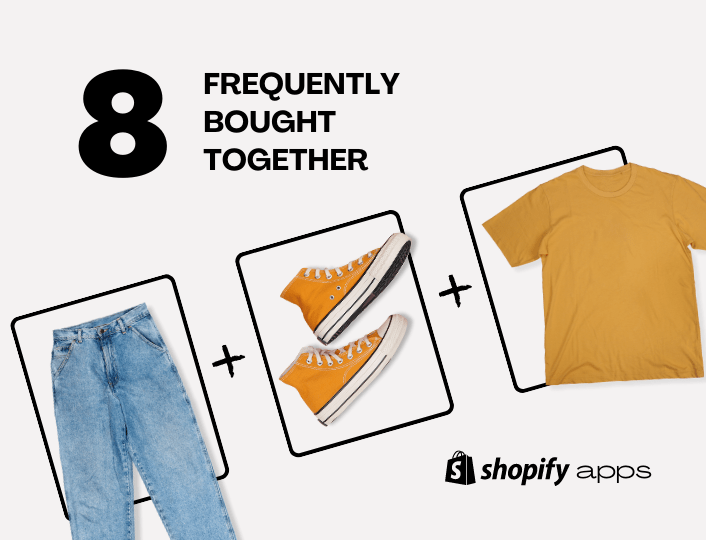
Different products that work together.
Common in beauty, fitness, and home goods.
3. Use-Case Bundles
Built around a specific need or scenario.
For example, a “starter kit” or “complete routine.”
4. Tiered Value Bundles
Structured pricing tiers that guide decision-making.
Often presented as “good, better, best.”
Each type serves a different purpose, but all aim to increase perceived value.
For a practical guide, see
How to Design Bundle Offers Customers Actually Want
Why Bundling Reduces Reliance on Discounts
Discount codes reduce price. Bundles increase perceived value.
This is a critical difference.
Discount-heavy strategies often:
- erode margins
- train customers to wait
- create dependency
Bundles achieve similar conversion benefits without lowering the base price.
This makes them more sustainable for long-term growth.
When Bundling Works Best
Bundling is most effective when:
- products have repeat usage
- items naturally complement each other
- customers already intend to buy
Examples include:
- skincare routines
- supplements
- apparel basics
- B2B-lite bulk purchases
In these cases, bundling feels natural—not forced.
When Bundling Doesn’t Work
Bundling is less effective when:
- the product is a one-time purchase
- there is no clear complementary value
- the product lacks strong demand
In these situations, bundling may add confusion instead of clarity.
Bundling works best as an optimization layer—not a fix for weak products.
Real Shopify Examples
Apparel Store
Introducing “buy 2 / buy 3” bundles for basics increased AOV by aligning with natural buying behavior.
Supplements Brand
Multi-pack bundles reframed the product as a longer-term solution, increasing perceived value and order size.
B2B-Lite Ecommerce
Tiered bundles matched bulk purchasing expectations, improving both conversion and order value.
Common Mistakes Merchants Make
- treating bundles as temporary promotions
- offering too many confusing bundle options
- not highlighting the best-value option
- relying on discounts instead of structured pricing
- ignoring placement on the product page
These mistakes reduce the effectiveness of bundling.
How to Implement Bundling Effectively
To use bundling as a growth strategy:
- limit options to 2–3 clear choices
- highlight the best-value bundle
- align bundles with real usage patterns
- place bundles near the buy button
- keep the structure simple and visual
The goal is not to offer more—it’s to guide better decisions.
Frequently Asked Questions
What is product bundling in ecommerce?
Product bundling is the practice of selling multiple items or quantities together as a single offer.
Why do bundles increase AOV?
Because they encourage customers to purchase more in a single transaction.
What types of bundles work best on Shopify?
Quantity bundles, complementary bundles, and use-case bundles.
When should you use bundles instead of discounts?
When you want to increase perceived value without reducing price.
Can bundling hurt conversion rates?
Yes, if bundles are confusing or poorly structured.
Final Thoughts
Product bundling is not about adding complexity—it’s about creating clarity.
It gives customers better choices, simplifies decisions, and increases the value of every transaction.
Instead of asking “How do we sell more products?”, a more effective question is:
“How can we package value in a way that customers naturally choose more?”
That’s where scalable ecommerce growth begins.